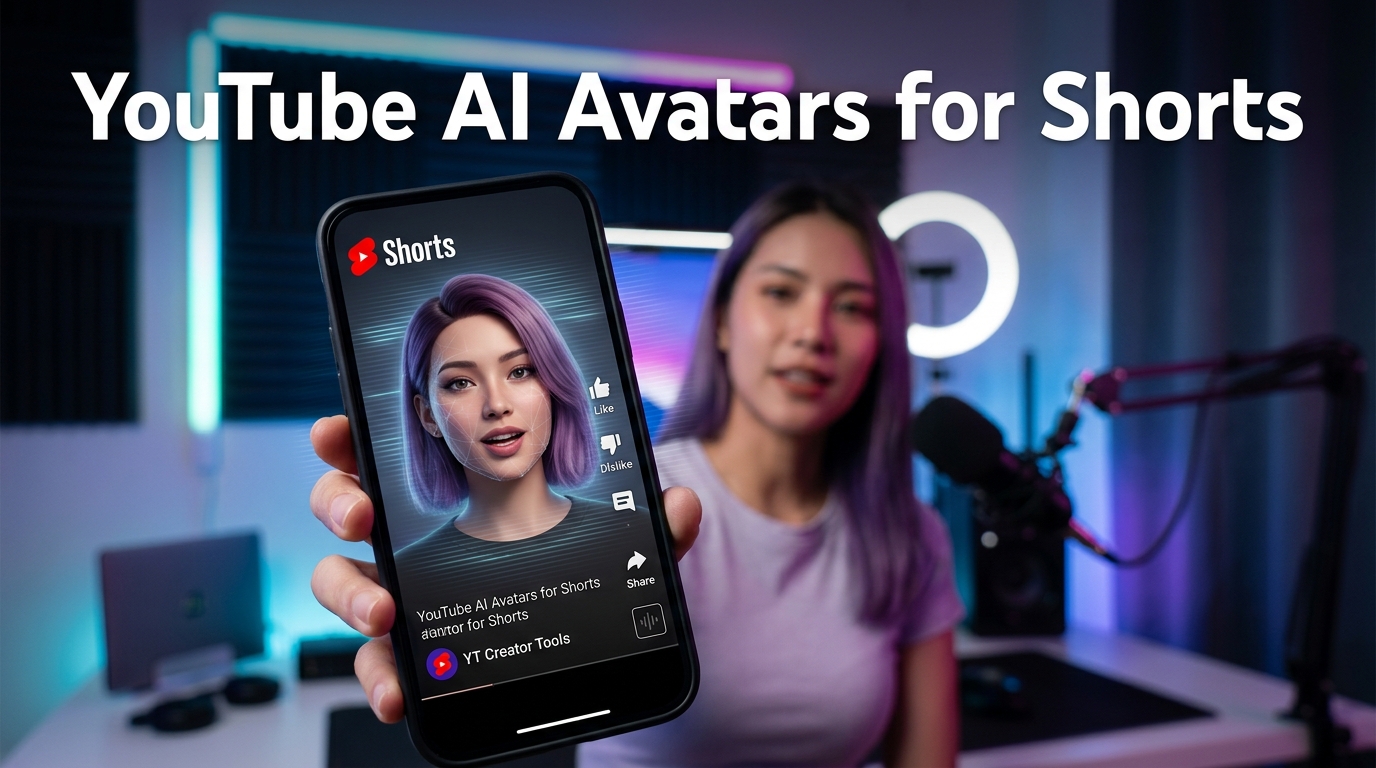
YouTube is pushing deeper into AI-powered creation, and this time the update lands directly inside Shorts. The platform has begun gradually rolling out AI avatars that let eligible creators build a digital version of themselves using a live selfie capture process and a voice recording. According to YouTube, the avatar can then be used to generate original videos that look and sound like the creator, while the output is labeled as AI-generated content.
That alone makes this one of the strongest creator news stories right now. It sits at the intersection of AI, Shorts, identity, monetization, workflow speed, and trust. And it immediately raises the question many creators will ask first: is this a powerful new production tool, or the start of a messier era where audiences feel less certain who is really on camera?
What YouTube is actually launching
This is not a simple cartoon profile image or a basic face effect. YouTube describes avatars as a digital version of the creator that can be made from the YouTube mobile app or the YouTube Create app. To set one up, an eligible user records a live selfie and voice sample once, then uses prompts to generate videos with that avatar.
YouTube also says the feature is rolling out gradually and is currently limited to people who are at least eighteen years old and who own an existing YouTube channel. The company presents it as a controlled creator feature rather than an open identity tool.
Why this will instantly get creator attention
On paper, the value is obvious. Shorts rewards speed, consistency, and high output. Many creators struggle to stay visible because recording themselves every time takes setup, lighting, retakes, and time they do not always have. A realistic avatar changes that equation. It could let creators produce more experimental Shorts, quick updates, alternate-language versions, or concept-driven clips without physically filming each one.
For channels built around personality, this could become a serious workflow shortcut. A creator who already uses tools like a script generator, a hook generator, or a YouTube title generator may soon see avatars as the next layer in a faster production stack.
The trust problem is not going away
This is where the feature becomes controversial. The more realistic these avatars get, the more creators will worry about audience trust. If a Short looks and sounds like the creator, but was generated through prompts, some viewers will feel impressed. Others will feel that a line has been crossed, even if YouTube labels the content as AI-generated. That emotional reaction matters, especially for channels built on authenticity and direct connection.
YouTube appears to understand that risk. Its help page emphasizes that the output is labeled as AI, that the account owner must complete the capture process, and that minors should not record themselves for avatar creation. YouTube also says the avatar can be retaken or deleted at any time, although deleting the avatar does not automatically remove videos already created with it.
Why Shorts is the perfect testing ground
If YouTube wanted to test a feature like this anywhere, Shorts was the obvious place. Shorts already moves fast, tolerates experimentation, and rewards format innovation. A long-form audience may question whether an AI-presented host still feels trustworthy across a fifteen-minute explainer. In Shorts, the platform can normalize the behavior much faster because short-form viewers are already used to remix culture, filters, templates, and AI-assisted creation.
That does not make the rollout minor. If avatars are accepted in Shorts first, the creative norms established there can influence what people later tolerate in longer videos too. That is one reason this feature feels bigger than just another mobile editing update.
The safety controls are the real story behind the headline
The flashy headline is the avatar itself. The deeper story is the safety framework around it. YouTube says avatars can only be created through a live selfie process, that the creator must record their own face and voice, and that only the creator can use their avatar to make original videos.
That does not remove every fear around misuse, but it shows YouTube understands that identity-based AI tools are far more sensitive than something like AI backgrounds or auto captions. The platform is not just shipping a shiny feature. It is shipping a feature that could become a reputational problem very quickly if the guardrails fail.
What this could mean for monetization and creator strategy
There is another layer here that creators should not ignore. If AI avatars lower the friction of appearing on camera, more creators may publish more often, which could intensify competition inside Shorts. That is good for platform activity, but tougher for anyone already struggling to hold attention. The winners will probably be creators who treat avatars as an enhancement rather than a replacement for creative judgment.
In practice, that means the basics still matter. Better hooks, sharper titles, tighter scripts, stronger packaging, and a clearer publishing workflow will still decide who benefits most. AI can multiply output. It does not automatically multiply originality.
Final take
YouTube is clearly preparing a new phase of Shorts where the creator’s digital self can become part of the content workflow. That could unlock convenience and scale, but it also raises a harder question: once a platform can reproduce your face and voice inside creator tools, what exactly will audiences treat as “you” six months from now?
That question is why this rollout matters so much. It is not just about a feature. It is about where creator identity goes next.