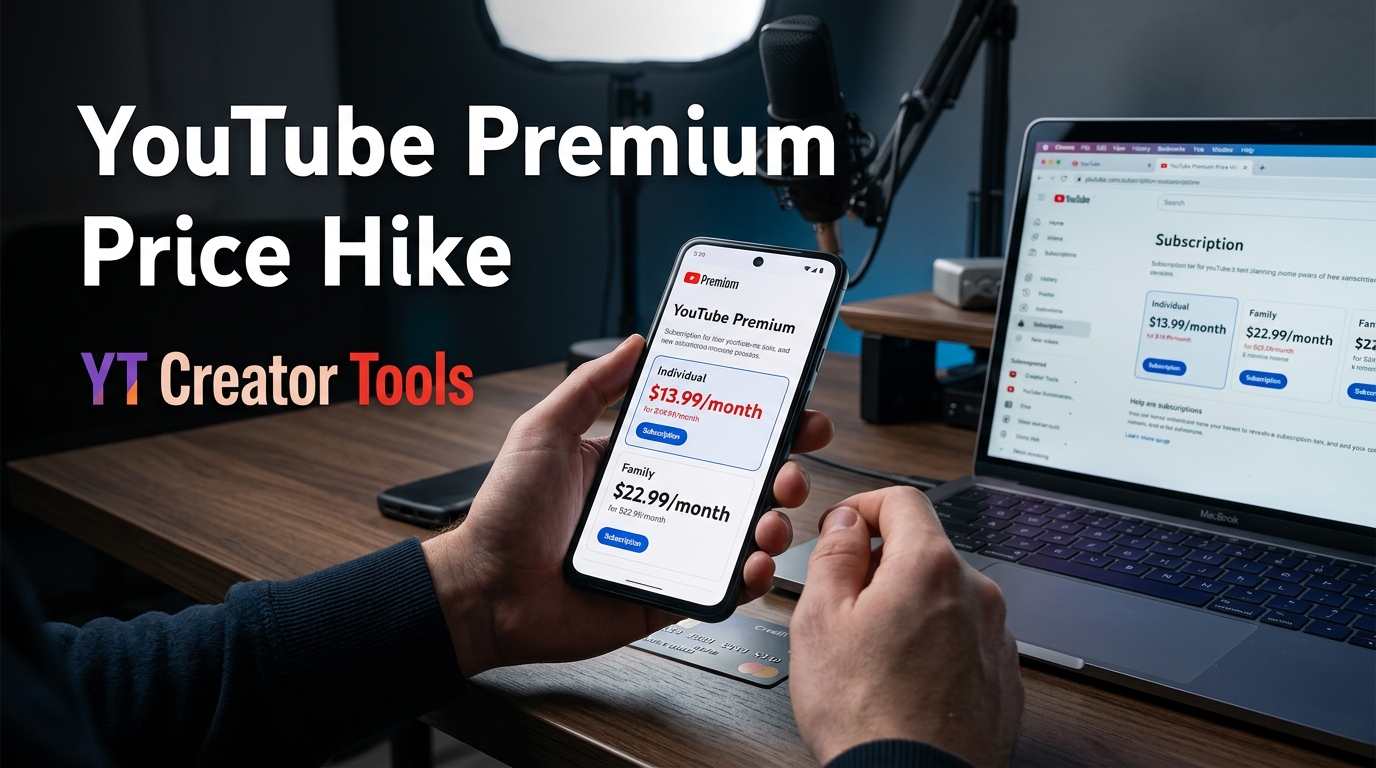
YouTube Premium is getting more expensive in the United States again, and the change is large enough to get real attention. The platform has increased the price of its individual Premium plan to fifteen dollars and ninety-nine cents per month, the family plan to twenty-six dollars and ninety-nine cents, and Premium Lite to eight dollars and ninety-nine cents. For new customers, the higher pricing is already visible. For many existing subscribers, the changes are expected to begin showing up with June billing.
On the surface, this looks like another routine subscription increase. But for users, it lands in a much more sensitive context. Ads feel more aggressive than before, YouTube keeps expanding the gap between the free experience and the paid one, and now the paid layer itself is getting more expensive again. That creates a very clear perception problem: viewers are being pushed harder from both sides.
What actually changed
The new US prices are straightforward. The individual YouTube Premium plan moved from thirteen dollars and ninety-nine cents to fifteen dollars and ninety-nine cents. The family plan moved from twenty-two dollars and ninety-nine cents to twenty-six dollars and ninety-nine cents. Premium Lite went from seven dollars and ninety-nine cents to eight dollars and ninety-nine cents.
For some users, that may not sound catastrophic in isolation. But subscription fatigue is real, and YouTube is no longer competing only with free video. It is competing with every other monthly service users already feel they are overpaying for.
Why this price hike hits differently
YouTube occupies a strange position in the market. It is both the default free video platform and an increasingly aggressive subscription business. That means every Premium increase immediately gets filtered through a simple emotional question from users: if I am already seeing more ads on the free side, why am I also being asked to pay more on the paid side?
This is why the latest increase matters beyond the numbers themselves. It strengthens the impression that YouTube wants to make the free experience more uncomfortable while also steadily moving Premium into a higher price bracket. For some users, that will feel like a reasonable trade-off for ad-free viewing, background play, and YouTube Music. For others, it will feel like platform pressure dressed up as a value update.
What it means for existing subscribers
New customers are seeing the higher prices immediately. Existing subscribers are being notified ahead of time, and reports indicate that the new pricing will begin appearing with billing cycles in June. That delayed effect matters because many long-time Premium users do not make decisions the moment a price hike is announced. They make them when the larger number actually shows up on the payment screen.
That is when YouTube will discover how sticky Premium really is in the US at these new levels. The people most likely to stay are those who view ad-free YouTube as non-negotiable. The people most likely to reconsider are casual users who liked Premium, but did not fully depend on it.
Premium Lite becomes more interesting too
One underappreciated part of this story is Premium Lite. Even after the increase, Lite still gives YouTube a lower-priced gateway for users who mainly want fewer ads without paying for the full Premium stack. That makes Lite more strategically important, not less.
If YouTube keeps widening the distance between free and paid viewing, Lite may become the compromise plan for users who do not want the full subscription but also do not want the full ad load. In other words, the company is not just raising prices. It is sharpening the ladder between free, Lite, and full Premium.
Why creators should care
At first glance, Premium pricing may look like a pure consumer story. It is not. Premium is also part of the broader monetization ecosystem around YouTube. The more the company pushes viewers toward paid plans, the more it changes how revenue, retention, and platform expectations evolve over time.
Creators should care because audience behavior shifts when the platform changes pricing pressure. Some users will accept the new price without thinking twice. Some will downgrade, cancel, or become more sensitive to ad load on the free tier. That affects viewing patterns, mood, and how people evaluate time spent on the platform.
For creators already optimizing packaging and workflow with tools like a YouTube title generator, a YouTube description generator, a hook generator, or a script generator, this is a reminder that YouTube’s business model changes can shape creator reality too.
The bigger strategic signal
The real signal here is not just that YouTube added a couple of dollars to the monthly bill. It is that the platform appears increasingly comfortable moving users toward a world where avoiding friction costs more every year. No ads, background play, bundled music, and a cleaner viewing experience are becoming more premium in the literal sense.
That may be good business in the short term. But it also carries risk. If users start to feel that both the free experience and the paid experience are getting harder to justify, frustration can build on both sides of the fence.
Final take
YouTube Premium is getting more expensive again, and the increase matters because it does not exist in a vacuum. It arrives at a time when many users already feel that ads are pushing harder, subscription costs are stacking up, and the platform is steadily tightening the path toward paid comfort.
For some people, Premium will still feel worth every dollar. For others, this may be the moment they finally ask whether ad-free YouTube is a necessity or just another monthly habit that became more expensive than they expected.