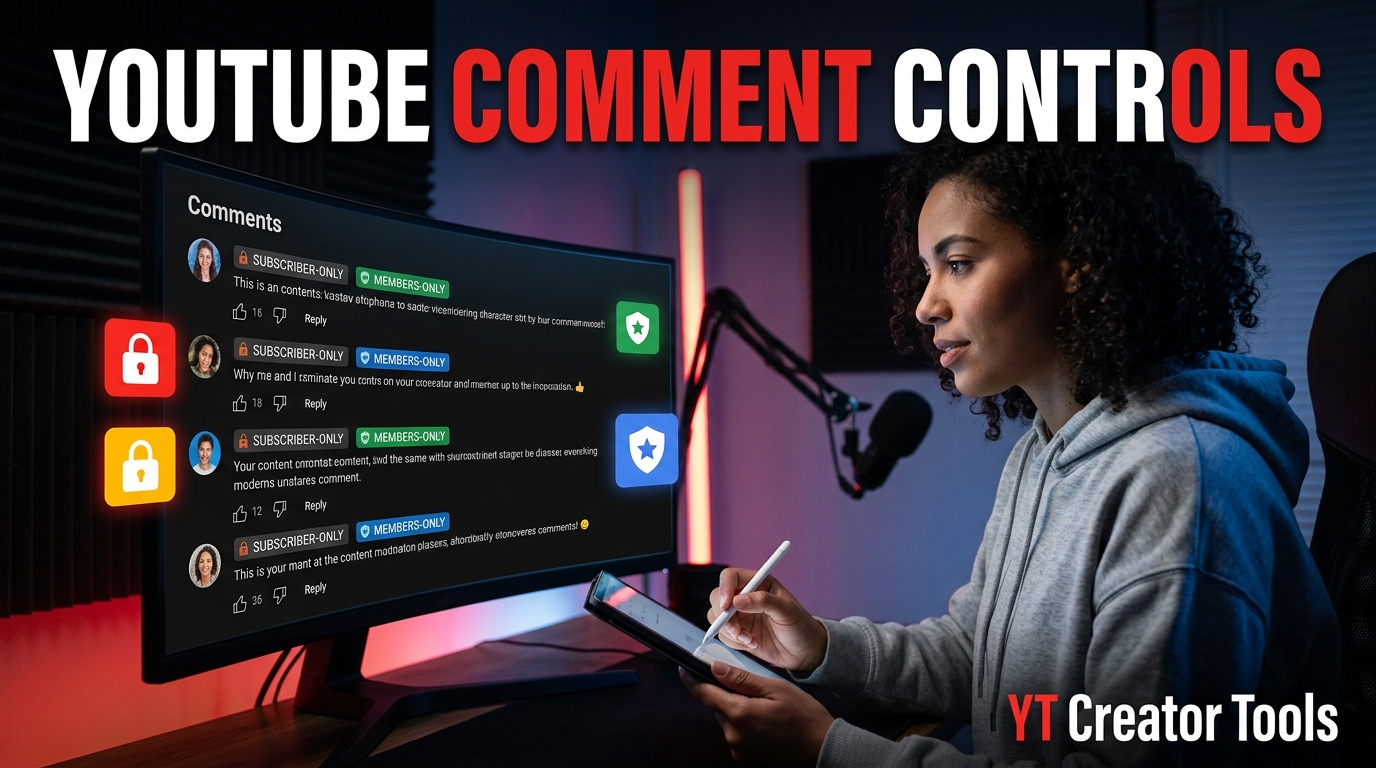
YouTube has rolled out one of the most practical moderation updates creators have asked for in a long time. Creators can now limit comments on individual videos and Shorts to subscribers and paid channel members, and they can also require a minimum subscription time before someone is allowed to comment. It sounds like a small settings change, but for many channels it is much bigger than that.
This is the kind of update that does not create flashy headlines outside the creator world, yet it can directly improve daily channel management. Spam floods, troll raids, low-effort hit-and-run comments, and chaotic Shorts threads are not abstract problems. For many creators, they are part of the weekly workload. More control over who can comment means more control over the tone of the channel itself.
What actually changed
YouTube now allows creators to restrict comments on individual videos and Shorts to subscribers and paid members of the channel. On top of that, creators can set a minimum subscription time before a viewer can comment. That means someone may need to be subscribed for a defined amount of time instead of subscribing one second earlier just to jump into the comments.
This matters because it moves moderation beyond the old all-or-nothing model. Before, many creators had to choose between leaving comments wide open or closing them down much more aggressively. Now there is a middle layer that can make the comment section more manageable without shutting it off completely.
Why this is useful right now
Comment sections can shape how a channel feels almost as much as the videos themselves. A strong comment section builds loyalty, signals community, and helps viewers feel like they are part of something alive. A bad one fills up with spam, bait, fake engagement, harassment, and noise that makes the channel feel cheap or unsafe.
That problem is especially sharp on Shorts, where comments can get messy fast. Short-form content moves quickly, reaches broad audiences, and often attracts drive-by behavior from viewers who have little connection to the creator. Subscriber-only comments and minimum subscription timing give creators a way to slow that chaos down.
What this changes for creators
For creators, this is not just a moderation update. It is a workflow update. Fewer bad-faith comments means less cleanup, less emotional drag, and less time wasted on threads that add nothing useful. That can matter a lot for small teams and solo creators who already juggle scripting, editing, titles, thumbnails, and publishing alone.
It also creates a stronger connection between community and access. If people want to comment, they may now need to show at least a minimal level of commitment. That changes the psychology of the comment space. It stops rewarding pure drive-by behavior and starts favoring people who are actually connected to the channel.
Why this matters for channel members too
The update also gives paid channel members clearer value. When comments can be limited to subscribers and members, membership starts to feel not only like support, but also like deeper participation. That is useful for creators building a stronger core community rather than just chasing raw public volume.
For some channels, especially those with passionate audiences or recurring controversy, that could make the comments section feel much healthier. It will not remove every problem, but it can change the ratio between actual community voices and low-quality noise.
This is also a signal from YouTube
The bigger signal is that YouTube understands moderation is not just about removing the worst content after it appears. It is also about giving creators more precise control before the problem scales. That is a more useful direction than endlessly asking creators to clean up after the flood.
YouTube is effectively admitting that creators need more flexible moderation layers, especially in a world where Shorts, live moments, controversy, and viral spikes can all send sudden waves of bad engagement into a channel. Better access control becomes part of creator safety and channel hygiene.
How creators should think about using it
Not every creator will want to lock down comments. For some channels, openness is part of the appeal. But for channels dealing with repeated spam, organized raids, fake engagement, or recurring toxicity, this feature gives a much more surgical option than closing comments entirely.
A smart creator will probably use this selectively. High-risk Shorts, sensitive videos, polarizing uploads, and moments of sudden traffic are the places where comment restrictions can be most useful. That makes the tool practical rather than symbolic.
For creators already treating channel growth like a full system with better packaging, stronger hooks, and cleaner publishing workflows using tools such as a YouTube title generator, a hook generator, or a script generator, this is another reminder that community quality is also part of the growth system.
Final take
YouTube giving creators more control over comments is not the loudest update on the platform, but it may be one of the most useful. Subscriber-only comments, member access, and minimum subscription timing can help reduce spam, weaken troll raids, and protect the tone of a channel without killing discussion altogether.
For many creators, that is exactly the kind of feature YouTube should be building more often - practical, targeted, and directly tied to the real mess creators deal with every week.