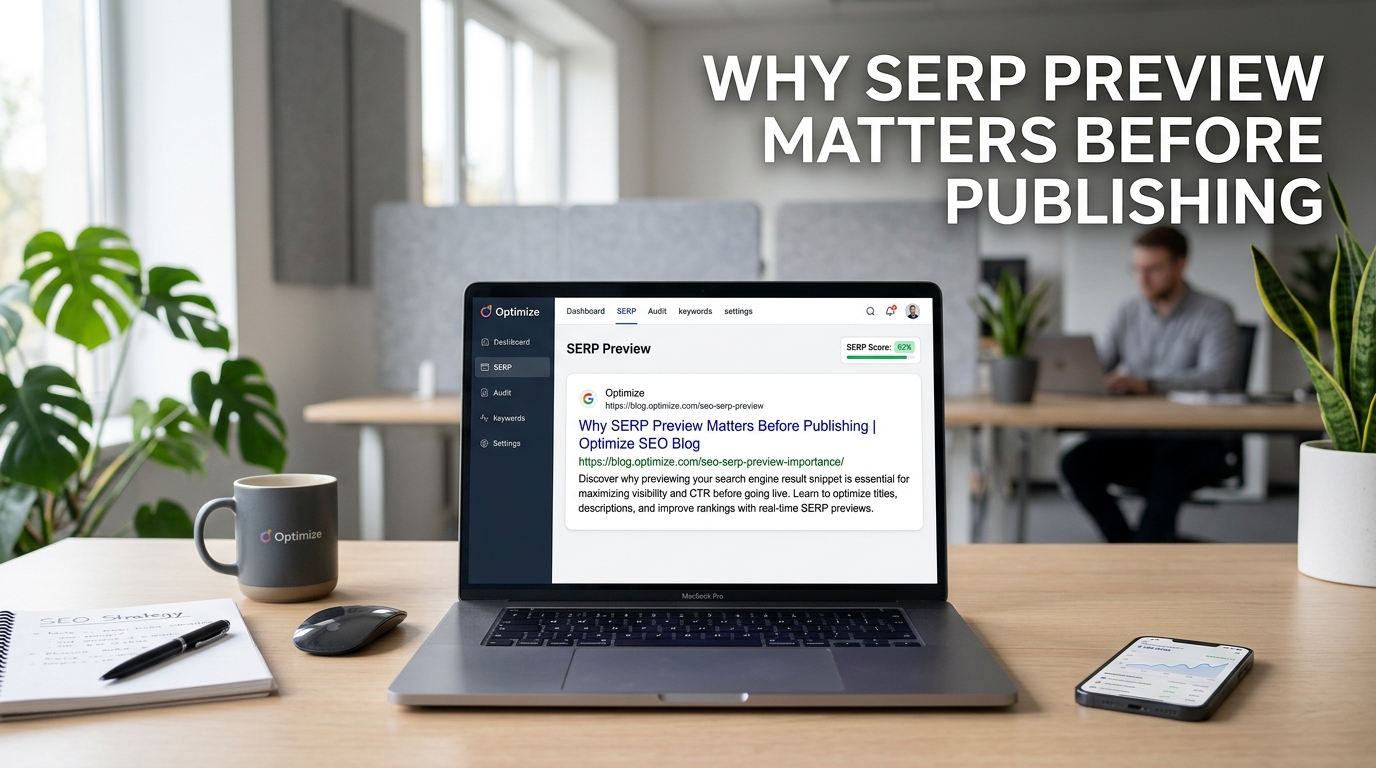
Publishing a page without checking how it may look in search results is a bit like printing a billboard without stepping back to see whether the headline is readable. Technically, the page exists. Practically, the first impression may be weaker than it needed to be. That is exactly why SERP preview matters before publishing a page. It helps you see how your title tag, URL, and meta description may appear together before the page goes live and starts representing your content in the wild.
A good page can still underperform in search presentation if the snippet looks awkward, unclear, cut off, or unconvincing. And that matters, because users often decide whether to click based on a very small amount of information. They see the title, the short description, the page path, and maybe a few surrounding competitors. That is not much room to make a case. Which is precisely why wasting that space casually is not a great strategy.
What SERP preview actually helps you see
A SERP preview gives you a practical simulation of how a search result snippet may look before publication. It helps you review the visual relationship between the page title, URL, and meta description. That matters because writing those elements separately does not always reveal how they behave together.
A title may look strong in isolation but become too long or clumsy next to the rest of the snippet. A meta description may contain the right information but still feel weak, repetitive, or visually dense when displayed under the title. The preview helps you inspect the package as a package instead of pretending all the parts will magically cooperate out of mutual respect.
Why first impressions in search results matter
Search results are crowded environments. Your page is rarely standing alone, waiting for thoughtful admiration. It is competing with other pages, other promises, and other headlines that want the same click. That means your search snippet is not just metadata. It is presentation. It is positioning. It is often the first contact point between the page and a potential visitor.
If the snippet is vague, bloated, or poorly framed, the page may lose clicks it could have earned with stronger packaging. That does not mean a SERP preview guarantees rankings or traffic by itself. It means it gives you a chance to avoid preventable presentation mistakes before they become public.
Titles and meta descriptions are easier to judge in context
One of the biggest reasons SERP preview matters is simple: context changes judgment. A title tag that felt fine while you were writing it may suddenly look too long, too generic, or too passive when seen in snippet form. A meta description that seemed informative may turn out to be dull, repetitive, or badly balanced once it sits below the title.
This is why previewing is useful even for experienced writers and SEO specialists. It creates a small but important distance between writing the fields and evaluating the result. That distance helps. Writing and judging are not always the same skill, and mixing them too quickly tends to produce avoidable blind spots.
Why truncation changes everything
One of the most common problems in search snippets is truncation. Titles get cut. Descriptions get cut. Important meaning disappears exactly where you wanted it most. A strong idea may survive, but it may also collapse into something vague or half-finished if the most useful words sit too far to the right.
A SERP preview will not tell you exactly what Google will show in every case, because search presentation can vary, but it does help you spot obvious risk early. If the title is already pushing length, or the description buries the useful message late, you can fix that before publication instead of discovering it later with a feeling that was entirely avoidable.
Preview helps improve clarity, not just length
People often think SERP preview is only about checking character count. That is part of it, but not the whole value. The larger benefit is clarity. A preview helps you see whether the snippet communicates anything useful quickly. Does the title say what the page is about? Does the description support that promise? Does the snippet feel relevant and readable, or does it wander around the point like it forgot why it entered the sentence?
This matters because search snippets are not read like articles. They are scanned. Fast. A clear preview helps you refine not only the technical fit, but the communication quality itself.
Why SERP preview belongs in a real SEO workflow
If you already care about keyword targeting, internal links, page structure, URLs, and metadata, then SERP preview belongs naturally in that same workflow. It is one of the last quality checks before publishing, and it helps align the page’s search-facing presentation with the actual intent of the content.
That is where a tool like a SERP simulator becomes genuinely useful. It is not there to create drama. It is there to let you inspect the snippet calmly before the page goes live and starts introducing itself to search users on your behalf.
Clean URLs help the preview feel stronger
Page path also affects how polished the search result looks. Clean, readable URLs support clarity. Messy paths, random slugs, or chaotic naming do not help. This is especially relevant on multilingual or structured sites where naming consistency matters across many pages.
If your workflow also touches slug creation and clean naming, related tools like transliteration can support better URL handling before the page reaches the snippet stage. The preview itself may be small, but the structure behind it still contributes to how professional the result feels.
Why preview is useful for marketers, not just SEOs
Marketers, content managers, founders, and publishers can all benefit from snippet preview, because search presentation is still marketing presentation. It is the page speaking in a compressed format. If the message is weak there, it does not matter much that the page itself is excellent once opened. The click must happen first.
This is one reason previewing feels so practical. It turns abstract metadata into a visible communication object. That makes it easier for more people on a team to evaluate whether the page is saying the right thing in the right way before it goes public.
Common mistakes SERP preview helps prevent
- Titles that are too long: the useful meaning arrives too late and risks being cut.
- Descriptions that say nothing clearly: technically full, strategically empty.
- Repetitive snippets: title and description echo the same weak phrase without adding value.
- Unclear page positioning: the user cannot tell what the page is really offering.
- Messy URLs: the snippet feels less controlled and less trustworthy.
Why this topic has strong search intent
People searching about SERP preview usually want something practical. They are either trying to understand why search snippets matter or they need a way to test and improve their own title and description before publishing. That makes the topic strong for SEO and for product-led content. The article explains the value. The tool supports the action.
That combination works because it respects the user’s actual problem. They do not need a philosophical essay about metadata. They need to know whether their page will look weak in search before they hit publish and regret the answer later.
Final thoughts
SERP preview matters before publishing a page because search presentation matters before traffic ever arrives. A page can be well written, well structured, and genuinely useful, then still lose clicks because the snippet looks weaker than the content behind it.
Previewing gives you a chance to fix that before the page goes live. It is a small step, but a smart one. And in SEO, small smart steps tend to outperform large dramatic ones with surprisingly annoying consistency.