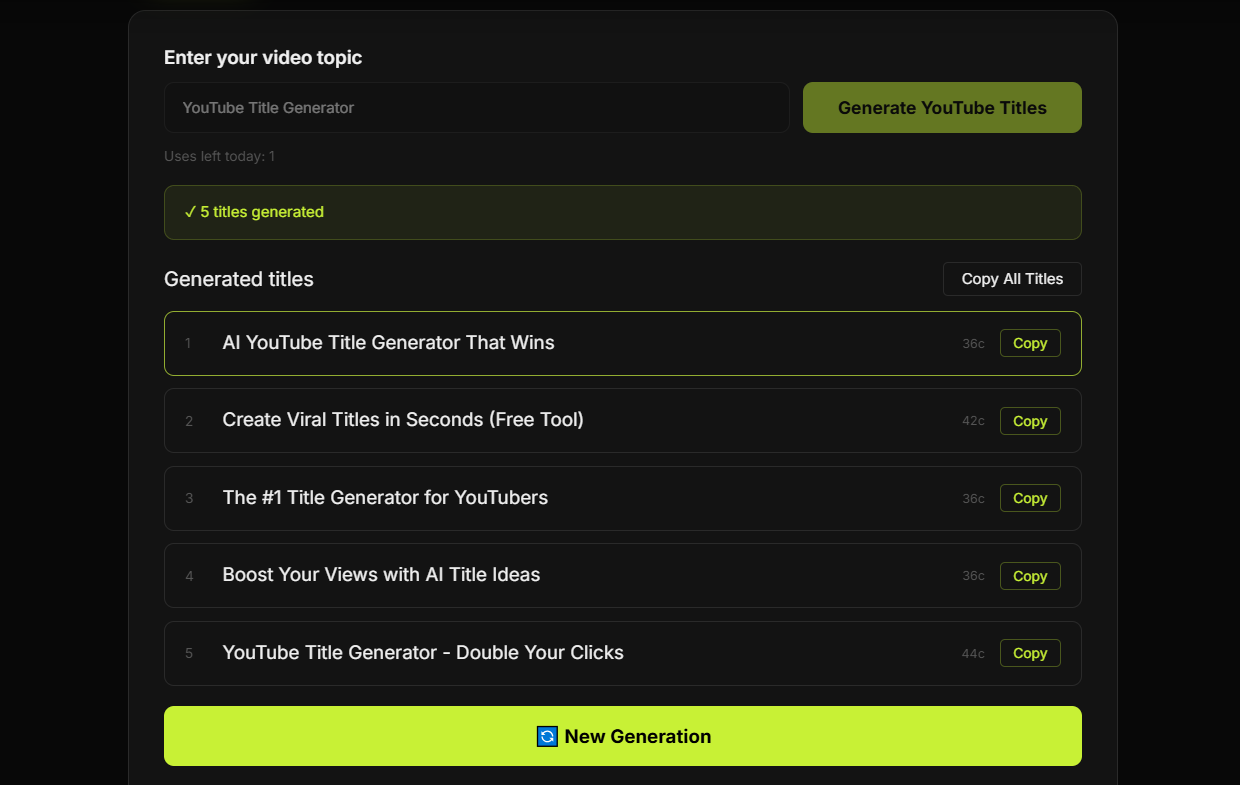
Writing a YouTube title should be simple. Then reality arrives, sits down heavily, and turns the process into a strange mix of marketing, psychology, formatting, topic positioning, and low level emotional bargaining. A title has to be clear, interesting, relevant, competitive, and readable. It has to support the thumbnail, match the content, and still make someone curious enough to click. That is exactly why more creators are learning how to generate better YouTube titles with AI.
A good AI title workflow does not replace strategy. It speeds up strategy. Instead of staring at a blank field and producing the same five overused patterns in a slightly different order, you can generate multiple angles, compare levels of curiosity, test clarity, and build stronger options faster. In other words, AI is not useful because it magically knows your audience better than you do. It is useful because it helps you think wider before you publish narrower.
Why YouTube titles matter so much
A title is one of the first signals a viewer sees. Along with the thumbnail, it forms the packaging of the video. The title tells the audience what kind of promise the content is making. If the title is too vague, too weak, too generic, or too cluttered, the packaging loses force before the video even gets a fair chance.
This matters for discovery and for click behavior. A stronger title can improve how clearly a video is understood in feeds, search results, and suggested video environments. It also helps the right audience recognize the topic faster. That is important because the goal is not random clicks from confused people who leave quickly. The goal is the right click from the right viewer.
What AI helps with in title creation
AI is especially useful in title generation because title writing is partly creative and partly structural. You need variation, but you also need discipline. You need hooks, but not nonsense. You need emotion, but not confusion. A good AI workflow helps you generate title options that explore different angles without making you manually reinvent the same wheel every time.
For example, AI can help you produce titles that are more direct, more curiosity driven, more search aligned, more emotionally framed, or more audience specific. It can also help you rewrite weak titles into cleaner ones and compare multiple directions before making a final decision. This is much more useful than pretending the first decent idea was automatically the strongest one just because it arrived early.
Why many creators struggle with titles
Creators often know their topic too well. That sounds like a strength, and sometimes it is. But it also creates tunnel vision. When you are too close to the video, the obvious phrasing in your head may not be the clearest phrasing for the audience. What feels specific to you may feel vague to everyone else. What feels exciting to you may look bland next to competing titles in the same niche.
This is one reason AI can be useful. It helps break that loop by giving you alternate phrasings, new emotional emphasis, different framing styles, and faster variation. You still need judgment, but you do not need to generate every possible title direction from scratch like a title monk seeking enlightenment through mild frustration.
What makes a YouTube title better
A better YouTube title is usually easier to understand, more focused, and more intentional. It tells the viewer enough to make the topic clear while leaving enough tension or curiosity to invite the click. It supports the thumbnail instead of repeating it clumsily. It matches the content instead of overselling it. And it avoids sounding like it was assembled by panic, clichés, and too many capital letters in a dark room.
In practical terms, better titles often have a clear subject, a recognizable tension point, a visible audience fit, and a stronger promise. Not always louder. Not always longer. Just stronger in the ways that actually matter.
How AI title generation supports packaging
The title does not work alone. It works with the thumbnail, topic framing, and description. That is why AI title generation is most useful when treated as part of packaging, not as an isolated line of text. A strong title should reinforce the visual idea of the thumbnail and make the promise more specific.
For creators working on full packaging, it also helps to connect title generation with a YouTube description generator and a YouTube tags tool. The point is not to stuff everything with the same words until the page starts feeling unwell. The point is to keep the overall topic signal clear across different parts of the upload workflow.
Why title variation matters
One of the biggest advantages of AI is variation speed. Most people can come up with one or two title options fairly quickly. The problem is that the first decent option often becomes the final choice by default. Not because it is the best title, but because everyone is tired and would like to move on with their lives.
AI makes it easier to generate ten or twenty directions quickly, then filter for quality. That matters because stronger titles often appear after comparison, not before it. Once you can see multiple options side by side, weak phrasing becomes easier to spot. You start noticing which titles are too vague, too long, too flat, too generic, or too clever for their own good.
How to use AI for better titles without getting junk
The quality of AI output depends heavily on the quality of the input. If you give vague prompts, you often get vague titles. If you provide the topic, audience, tone, main hook, type of video, and packaging direction, the results are usually much stronger. AI is not offended by clarity. It tends to benefit from it.
That is why good workflows define what the title needs to do. Should it sound more direct, more emotional, more search aware, more curiosity driven, or more premium? Should it fit a Shorts format or a long-form video? Should it target beginners, fans, buyers, or general viewers? Once those questions are answered, AI becomes far more useful and much less random.
Common mistakes in AI generated YouTube titles
The first mistake is accepting the output too quickly. AI can generate useful options, but it can also generate generic, exaggerated, repetitive, or awkward phrasing. The second mistake is chasing clickbait without precision. A title that creates curiosity but misframes the content can damage trust. The third mistake is ignoring packaging fit. A good title on its own may still be a weak title for that thumbnail.
This is why editing matters. AI should help you produce stronger options faster, not remove human judgment from the process entirely. If anything, it gives you more material to judge well.
Why a dedicated title tool helps
A general chat prompt can help with brainstorming, but a dedicated AI YouTube title generator is useful because it keeps the workflow focused on the actual task. The user is not there to have a philosophical discussion about content strategy. The user wants sharper title options, faster. A specific tool shortens the path between idea and usable output.
This is especially valuable for creators publishing frequently, testing different niches, running multiple channels, or refining packaging under time pressure. If titles are a recurring problem, then structured speed is not a luxury. It is operational sanity.
How this topic supports SEO and creator intent
The search intent here is strong because the user usually wants immediate help. They already know titles matter. They are searching for a way to create better ones. That makes this topic valuable both as a support article and as an entry point to a real tool. The article explains the why and the how. The tool delivers the output.
From an SEO and product perspective, that is a healthy combination. Useful content builds trust and relevance. Practical tools convert that intent into action. Ideally with less guessing and fewer titles that sound like they were written during an avoidable emergency.
Final thoughts
If you want better video packaging, learning how to generate better YouTube titles with AI is one of the most practical improvements you can make. It helps you move faster, explore more angles, reduce creative tunnel vision, and make title decisions with more context and less panic.
The goal is not to let AI think for you. The goal is to let AI help you think further, compare better, and publish stronger. Which is a much more respectable use of technology than endlessly rewriting the same weak title and hoping confidence alone will fix it.